Nine Asian Drama Food Scenes That Had You Opening a Delivery App at 2 A.M.
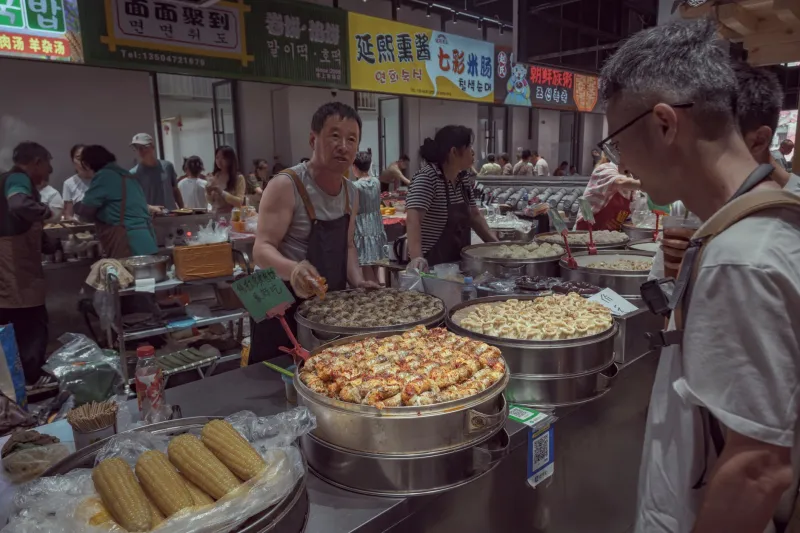
Nobody warns you that Asian dramas are secretly cooking shows with a plot attached. You sit down for one episode of romance and stand up 40 minutes later with a specific, urgent craving and no idea where to get it.
Here are nine recurring food moments that do the most damage — and what each one is really saying.
1. Ramyeon at the Kitchen Table, 2 A.M.
A pot, two chopsticks, one person, no lights on except the ones over the stove. Ramyeon is the drama shorthand for loneliness that has stopped being dramatic. Nobody is crying. They are just eating noodles at an hour when only people with something on their mind are awake.
When two characters share that pot, it means something else entirely: you are being let into someone's worst hour. And yes, half of America has a packet of instant noodles in the cabinet precisely because of scenes like this.
2. The Convenience Store Triangle
Three high schoolers, a plastic table outside a convenience store, and a triangle of kimbap split three ways. This is where dramas go to talk about class without saying the word. One kid pays. One kid pretends not to notice. One kid eats more than their share and gets called out for it, which is how you know they are loved.
Banana milk is almost always present. You cannot explain why it makes you emotional. It just does.
3. Fried Chicken and Beer After a Very Long Week
Chimaek — the pairing of fried chicken and cold beer — has become the default celebration in Korean drama, and it earns its spot. It shows up after a win, after a breakup, after someone finally quits the job. It is food for the moment the characters stop pretending they are fine.
The camera always lingers on the crunch. That is not an accident. That is a threat.
4. Jjajangmyeon on Moving Day
Black bean noodles, delivered in a metal tray if the show is feeling nostalgic, eaten out of cardboard if it is not. In Korean drama, jjajangmyeon is the food of transition: a new apartment, a new job, a family that just got smaller. It is cheap, it is messy, and it is impossible to eat with dignity — which is exactly why it shows up when characters need to be human in front of each other.
5. The Hotpot Table That Is Also a Negotiation
Chinese dramas love a hotpot for the same reason diplomats love a dinner: everyone is doing something with their hands while saying something dangerous. The pot is a shared asset. Who puts what in, who gets the last piece, who keeps refilling someone else's bowl — it is all plot.
Family dramas use it to stage reunions that are 30 percent warmth and 70 percent grievance. You will finish the episode wanting broth.
6. The Onigiri and the Empty Apartment
Japanese dramas understand that a single convenience store rice ball can carry an entire character. No dining table, no dinner companion, just a plastic wrapper and a window. It is the visual language of solitude that is not yet sad, or maybe is sad and does not want to discuss it.
A drama will then have the person get invited to a real meal, and you will feel it in your chest. That is what the rice ball was for.
7. Tteokbokki at a Street Tent
Red, syrupy, aggressively chewy, and always eaten standing up. The pojangmacha tent is where characters go when they need to be honest in public without being seen. Teenagers use it to declare independence. Adults use it to admit they got fired.
It is also the food most likely to make a US viewer type tteokbokki into a delivery app and discover, to their dismay, that it is 11 p.m. and nothing nearby has it.
8. The Dinner Everyone Dressed Up For
The chaebol family dinner. The banquet. The private room with a lazy Susan and a very expensive fish. This is where dramas put class on the table — literally. The food is beautiful and nobody eats it. Someone makes a remark. A glass gets set down a fraction too hard.
These scenes are never actually about hunger. They are about who is allowed to sit down, and every viewer immediately wants a bowl of noodles to recover.
9. Pork Belly and Soju With the People You Work With
The company dinner starts with hierarchy and ends with someone crying. The grill is in the middle of the table, the soju glasses are tiny, and the boss is expected to pour first. Two hours later everyone is singing badly and one character has said the thing out loud that they have been holding since episode 3.
Barbecue in drama is communal labor. Someone is always cooking for someone else, which is the whole point.
The Real Reason You Order Food After an Episode
Food in Asian drama is rarely background. It is the cheapest, most efficient way a show can tell you about money, family, status, and who a character trusts. A shared pot means intimacy. An untouched banquet means distance. A plastic wrapper means nobody is coming home tonight.
So when you finish an episode at 1:50 in the morning and start scrolling for anything open nearby, understand what happened. You were not just watching people eat. You were being told something, and your stomach heard it first.