Dub It, Sub It, Argue About It: Inside the 2026 Voice-Over Boom Reshaping How America Watches Asian Drama
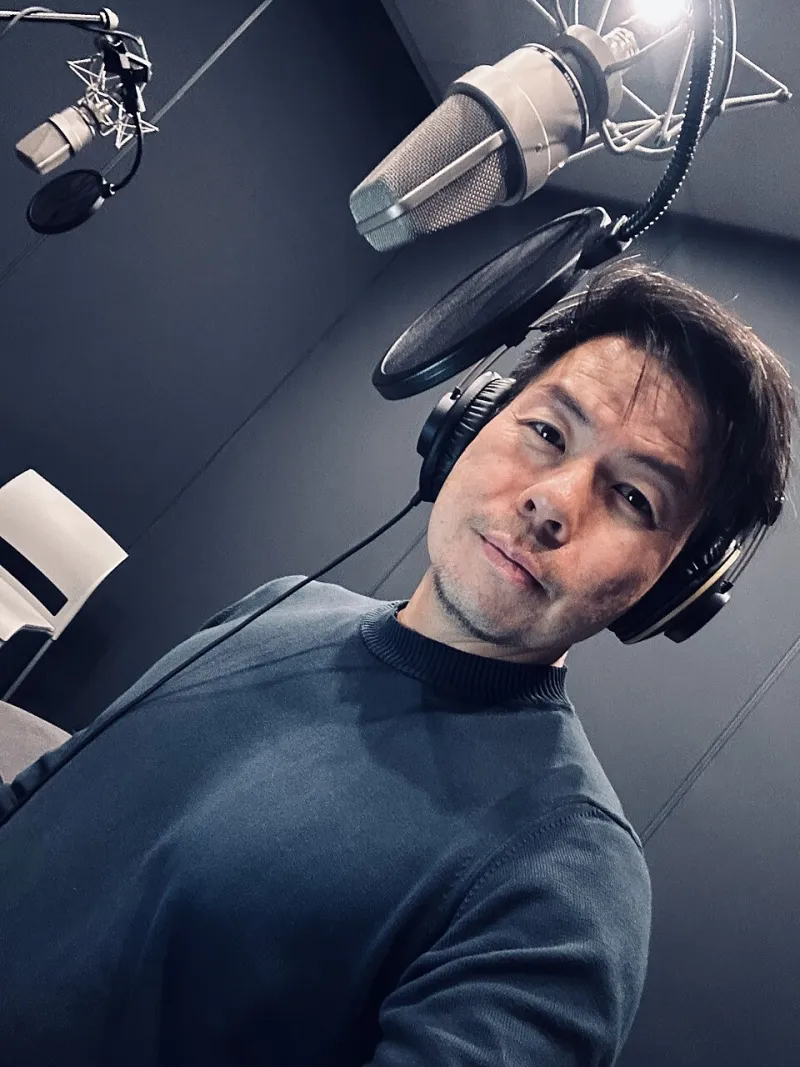
Photo: Voice Vt007, CC0, via Wikimedia Commons
There is a specific kind of silence that happens in a group chat when someone admits they watch with dubs on. It is not judgment exactly. It is more like everyone collectively deciding whether to be normal about it.
That silence is getting harder to justify. Because in 2026, the dubs are — and this is genuinely strange to type — pretty good.
The Dubs Got Better and Nobody Threw a Party
A decade ago, an English dub of a Korean drama sounded like a hostage negotiation recorded in a closet. Two or three voice actors recycled across the entire cast, dialogue flattened into a neutral accentless drone, and every cultural reference sanded down until the show could have been set anywhere. Fans learned to treat subtitles as the only honest option, and they were mostly right.
What changed is not mysterious. Streaming platforms now treat localization as a product feature rather than an afterthought, which means real casting, real direction, and scripts adapted by writers who actually watch the show instead of translating it line by line. The result is dubs that preserve jokes, keep the rhythm of a scene, and — most importantly — sound like people talking to each other.
The old tell was always the emotional peaks. A confession scene in a bad dub landed like a customer service call. In a good one, you can hear a performer making a choice.
Where Dubbing Quietly Wins
Let us be fair to the dub defenders, because their case is stronger than the discourse admits.
First, eyeline. Subtitles pull your attention to the bottom third of the frame, which is exactly where directors do not put the important stuff. A dub lets you watch a face during a two-minute silence. That is not a small thing in a medium that lives and dies on close-ups.
Second, accessibility. Not everyone can read subtitles at speed while also tracking a plot, and nobody should need a medical exemption to enjoy a show. Dyslexia, vision issues, second-language households, kids in the room, a phone in your hand while you fold laundry — the dub audience is enormous and mostly invisible.
Third, comedy. Try reading rapid-fire banter in a subtitle track and you will miss half the timing. A skilled dub cast can land a joke in real time.
Where Subtitles Still Do Something Dubs Can't
And yet. Subtitles preserve the edges.
Korean is a language that encodes relationships into pronouns and honorifics. Who calls whom oppa, when a character switches from formal to casual speech, the exact moment someone drops a suffix as an insult — that is characterization, not decoration, and it does not survive translation into English intact. A subtitle can at least flag it. A dub generally cannot.
Japanese has the same problem from a different angle, where politeness levels carry entire social hierarchies. Chinese dramas run on four-character idioms that land like a punchline to a native ear and like nothing at all to everyone else. Subtitles can footnote those. Dubs must either explain them in dialogue, which is clunky, or drop them, which is quiet loss.
Then there is the voice itself. Korean and Japanese actors are trained for a specific kind of vocal performance — the tremble, the half-swallowed line, the sudden volume drop that means everything. A dub performer is not imitating that; they are creating a new performance on top of an existing one, and sometimes the two do not quite line up.
The Jokes That Never Cross the Border
Every adaptation loses something, and the losses are rarely the same. A dub might sacrifice a pun and replace it with a different joke that works. A subtitle might preserve the pun and leave you staring at a footnote while the scene moves on without you.
Neither is faithful in the pure sense. Both are translations. The only real question is which losses you personally notice and which ones you never find out about.
The 2026 Push Is a Business Story
The current boom is not driven by artistry alone. Anime proved that a well-dubbed release widens an audience dramatically, and drama distributors noticed. Dubs travel. They play on broadcast, on airplanes, in households where nobody is going to read a screen for 16 hours. Every platform chasing subscribers in the US market wants a version of a show that requires zero effort to start.
That is good for the shows. It is also why the subtitle loyalists get nervous. If the dub becomes the default, does the subtitled version keep its budget and its care? So far, yes. But it is a fair thing to keep an eye on.
Honestly, Watch It However You Want
Here is the unhelpful truth: both sides are defending something real. Dub viewers are protecting attention and access. Subtitle viewers are protecting nuance and the original performance. Nobody is doing culture wrong.
What is worth resisting is the snobbery in either direction — the assumption that dub watchers are lazy, or that subtitle readers are pretentious. A drama is a story someone made and someone else translated so it could reach you. The version that gets you to episode 16 is the correct version.
If you have avoided dubs since the bad old days, this is a genuinely reasonable year to give one a try and see if the ghosts are gone. And if you try it and hate it, your subtitles are right there, waiting, exactly where you left them.