More Than a Backdrop: How K-Drama Filming Locations Shape the Stories You Can't Stop Watching
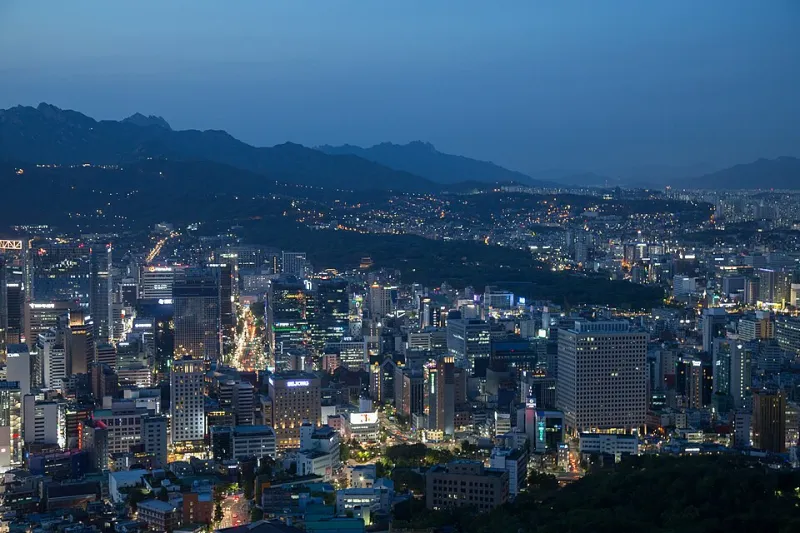
Photo: Flickr - Laurie Nevay https://www.flickr.com/photos/laurienevay/, CC BY-SA 2.0, via Wikimedia Commons
You know that moment when a drama cuts to a sweeping shot of a coastal village at dusk, and something in your chest just... shifts? Or when two characters are fighting in a cramped alley in Itaewon and the chaos of the street somehow mirrors exactly what's happening between them emotionally? That's not an accident. That's geography doing its job.
K-dramas — and Asian dramas broadly — have a relationship with their filming locations that goes way beyond "hey, this place looks nice on camera." These shows treat physical space like a co-writer. The neighborhood, the coastline, the mountain temple — they're all pulling their weight in ways that American TV rarely attempts. And if you've ever found yourself Googling a café from your favorite drama at 1 a.m., you already know this on some level.
Let's actually dig into why it matters.
Seoul Is Not One Place — It's a Dozen Different Moods
Here's something that surprises a lot of US viewers: Seoul is enormous, and different parts of the city carry completely different emotional registers in Korean storytelling. Screenwriters and directors know this, and they exploit it constantly.
Gangnam — specifically the gleaming towers around Cheongdam-dong and Apgujeong — is almost shorthand for wealth, ambition, and the kind of cold perfection that usually signals a character is either the antagonist or someone about to get humbled. When your lead works in a glass-walled office in this neighborhood, you already know something about who they are before they've said a word.
Flip to Mapo-gu or Hongdae, and the energy is completely different. These neighborhoods skew younger, artsy, a little chaotic — which is exactly why dramas set early romance or found-family storylines there. The winding streets and independent coffee shops communicate warmth and possibility in a way a Gangnam penthouse never could.
Then there's Bukchon Hanok Village, where traditional Korean architecture creates an almost timeless atmosphere. Dramas that use this area are usually signaling something about heritage, unresolved history, or characters caught between old ways and new ones. The location is doing thematic work before the dialogue even starts.
Why Coastal Villages Keep Showing Up When Characters Need to Fall Apart
If you've watched more than a handful of K-dramas, you've noticed the pattern: someone's life implodes in the city, and they end up in a small coastal or rural town. Hometown Cha-Cha-Cha built an entire series around this premise. Our Blues used Jeju Island as both setting and emotional landscape. Even When the Camellia Blooms leaned hard into the isolated, slightly melancholy atmosphere of a small seaside town.
This isn't lazy writing — it's intentional contrast. The pace of a fishing village is physically different from Seoul. The camera slows down. The color palette shifts to something more muted and natural. Characters who were wound tight in the city suddenly have space to breathe, and so do the viewers. The geography is literally pacing the emotional arc of the story.
For US audiences, it's a little like the difference between a scene set in Manhattan versus one set in a small town in Vermont — except K-drama writers have refined this contrast into a genuine storytelling tool rather than just a change of scenery.
How to Spot Filming Locations Like a Pro
Okay, so you want to start actually noticing this stuff while you watch. Here's what to look for:
Pay attention to transitions between locations. When a drama cuts from one neighborhood to another, ask yourself what changed emotionally in that cut. Did the scene get lighter or darker? More crowded or more isolated? Directors use location changes to signal internal shifts in characters.
Look at the architecture. Modern glass and steel usually means power, ambition, or emotional distance. Older buildings, narrow alleyways, and traditional structures tend to signal intimacy, history, or vulnerability. It's not a hard rule, but it holds up more often than not.
Notice the natural light. K-drama cinematography teams are obsessive about golden hour, and they'll often schedule emotionally significant scenes — confessions, confrontations, quiet realizations — in locations where the natural light does half the emotional work for them. Coastal locations and mountain settings are particularly popular for this reason.
Check the crowd density. Scenes where characters feel overwhelmed or exposed tend to happen in busy public spaces — markets, subway stations, crowded streets. Intimate or vulnerable moments almost always pull the characters into quieter, less populated spaces. The geography is mapping the emotional temperature.
Why Certain Cities Keep Showing Up (And What That Says)
Beyond Seoul, a handful of locations appear in Korean dramas so frequently they've basically become genre conventions.
Jeju Island is practically its own character at this point — lush, remote, and carrying a slightly melancholy energy that makes it perfect for stories about grief, starting over, or love that exists slightly outside of real life. The island's visual distinctiveness (volcanic rock, green hills, turquoise water) also makes it immediately recognizable to international viewers, which doesn't hurt.
Busan shows up when dramas want grit and authenticity. It's Korea's second-largest city, but it has a rougher, more working-class energy than Seoul that writers use deliberately when they want stories grounded in struggle and resilience.
Gyeongju, with its ancient temples and burial mounds, tends to appear in historical dramas or contemporary stories with deep roots in the past. The city is basically a living museum, and its presence in a drama is almost always a signal that history is about to matter to the plot.
What Hollywood Gets Wrong (And What We Can Learn From It)
American TV isn't bad at using location — prestige dramas like The Wire or Ozark use setting brilliantly. But mainstream US television has a tendency to treat locations as interchangeable backdrops, especially when the story is primarily character-driven. A romantic comedy set in New York could often be dropped into Chicago or LA without changing much.
K-dramas are more specific, and that specificity pays off emotionally. When a character stands on a particular beach in Jeju or walks through a specific alley in Insadong, viewers who've done even a little research know the weight that location carries. And for the international fans who haven't been to Korea, those locations become aspirational — part of the reason Korean tourism has exploded among people who first fell in love with the country through its dramas.
The Fan Pilgrimage Phenomenon
Here's the real proof that this stuff works: people are booking flights. Drama tourism — visiting filming locations from beloved shows — is a genuinely significant part of Korean tourism now, driven largely by international fans. The café from Coffee Prince, the bridge from Goblin, the neighborhood streets from Reply 1988 — these places have become pilgrimage sites for fans who want to stand in the exact spot where something emotionally significant happened on screen.
That only happens when a location has done real narrative work. You don't fly to South Korea to stand in front of a generic backdrop. You go because that specific place meant something in the story, and you want to feel it.
So next time you're deep in a new drama and the camera lingers on a rain-soaked alley or a sunlit rooftop, don't skip past it. That's not filler. That's the show telling you exactly where you are — emotionally, narratively, and geographically. And in K-dramas, all three of those things matter more than you might think.