Rooting for the Wrong Guy Has Never Felt So Right: Inside the Second Lead Revolution
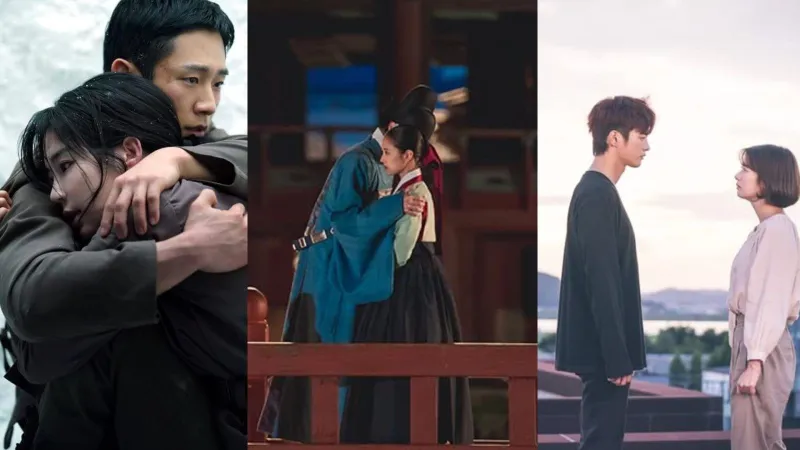
Photo: sad handsome man watching couple from distance Korean drama, via images.lifestyleasia.com
It usually hits somewhere around episode four. The main lead does something emotionally unavailable — again — and suddenly the second guy, the one who remembered her coffee order and showed up in the rain without being asked, is looking a whole lot more appealing. You tell yourself you'll stay loyal to the OTP. You don't.
Welcome to Second Lead Syndrome, or SLS — a condition that's been quietly infecting K-drama and Asian drama fandoms for years and has recently exploded into something far bigger than a Reddit thread. American viewers, in particular, have turned SLS into a genuine cultural phenomenon, organizing online communities, launching social media campaigns, and demanding that writers stop treating their favorite second leads like narrative furniture.
What Exactly Is Second Lead Syndrome?
For the uninitiated: in most Asian dramas, the romantic structure follows a fairly reliable blueprint. There's a main couple — the destined pair — and then there's the second male (or female) lead, the person who loves the protagonist just as deeply but is ultimately written out of the love story. Second Lead Syndrome is what happens when viewers become so emotionally attached to that secondary character that they start actively grieving the relationship that never gets to happen.
It sounds dramatic. It is dramatic. That's kind of the point.
What makes SLS particularly potent in Asian dramas compared to, say, a Western romantic comedy is the sheer level of emotional craftsmanship that goes into building the second lead's arc. These characters aren't written as obvious villains or comic relief. They're written as genuinely good people — sometimes better people than the male lead — who simply exist on the wrong side of fate. That specificity is devastating in a way that Western love triangles rarely manage to replicate.
Why Asian Dramas Are Built for This Kind of Heartbreak
There's a structural reason Asian dramas manufacture second lead attachment so effectively, and it comes down to pacing. A typical K-drama runs 16 episodes, each clocking in at around an hour. That's a lot of screen time — enough to build a secondary character's emotional world with the kind of depth that most American TV reserves for main cast members.
Showrunners and writers in Korean, Taiwanese, and Chinese drama productions have also developed a particular vocabulary for the second lead's love language. Where the main lead often embodies passion and conflict — the push-pull dynamic that drives plot — the second lead tends to represent consistency, quiet devotion, and unconditional support. For a lot of viewers, especially those who've watched enough will-they-won't-they drama to last a lifetime, that steady presence hits different.
There's also the cultural context of han — the Korean concept of a deep, internalized sorrow tied to unrequited longing — that seeps into how second leads are written. Even when it's not explicitly named, that emotional undercurrent gives these characters a gravity that resonates with audiences across cultural lines.
The Fan Communities Demanding Justice
American drama fans have never been passive consumers, and SLS has given them a rallying point. On platforms like Twitter (now X), TikTok, and dedicated subreddits, communities have sprung up around specific second leads with the kind of fervor usually reserved for sports teams. Hashtags advocating for fictional characters' romantic redemption regularly trend during live-watch events. Fan edits reimagining alternate endings rack up millions of views.
Some of the loudest conversations have happened around beloved titles available on major streaming platforms. Characters from dramas like My Love from the Star, Boys Over Flowers, and Weightlifting Fairy Kim Bok-joo have inspired years-long debates about narrative fairness. More recently, newer titles have sparked fresh waves of SLS discourse, with American fans often leading the charge in international fandom spaces.
What's interesting is how streaming has democratized this conversation. Before platforms like Netflix, Viki, and — yes — services like DoRamy brought Asian content to American living rooms, these discussions were largely siloed within niche fan communities. Now, a viewer in Ohio who just finished her first K-drama is immediately plugged into a global fandom infrastructure where her feelings about the second lead are not only valid but celebrated.
Social Media Turned the Volume Way Up
TikTok deserves special mention here. The platform's algorithm has an uncanny ability to surface emotional content, and second lead moments — a lingering look, a sacrifice made off-screen, a confession that comes just one episode too late — are practically engineered for the kind of short, gut-punch video edits that go viral. American creators have built entire channels around SLS content, introducing new audiences to dramas they'd never have discovered otherwise.
There's a feedback loop at play, too. As these videos circulate, they pull in viewers who come for the second lead content and end up binge-watching the whole series. Streaming numbers go up. Platforms take notice. And slowly, the industry starts paying attention to what fans are screaming about.
Some writers have already started listening. Recent dramas have experimented with giving second leads more satisfying arcs — not necessarily winning the love story, but receiving closure that feels earned rather than perfunctory. It's a small shift, but to a fandom that's spent years watching their favorites get written off with a sad smile and a one-way ticket out of the narrative, it means everything.
Is the Main Couple Actually the Problem?
Here's the uncomfortable question that SLS discourse keeps circling back to: are second leads so compelling because they're genuinely better written, or because the main couple is often underwritten by comparison?
It's probably both. The tension and conflict that drives a main romantic arc can sometimes flatten characters into archetypes — the cold CEO, the clumsy girl-next-door — while the second lead, freed from the burden of being the endgame, gets to just be a full human being. That freedom reads on screen.
American audiences, raised on a diet of TV that increasingly rewards morally complex, non-archetypal characters, may be especially sensitive to this dynamic. When a K-drama second lead gets more nuanced writing than the lead he's competing with, viewers notice — and they vote with their emotional investment.
What This Means for the Future of Asian Drama Storytelling
The Second Lead Syndrome conversation is ultimately about something bigger than shipping wars. It's about what audiences want from romantic storytelling — more complexity, more fairness, more acknowledgment that love isn't only meaningful when it wins.
As Asian dramas continue to find massive audiences in the US, the pressure to evolve these narrative conventions is only going to grow. Fans aren't just watching anymore. They're organizing, creating, and making their preferences impossible to ignore.
The second lead may not get the girl in the final episode. But in the court of fan opinion? He's been winning for years.